
Air 3S Wildlife Mapping in Windy Conditions: Expert Best Practices for Reliable Aerial Surveys
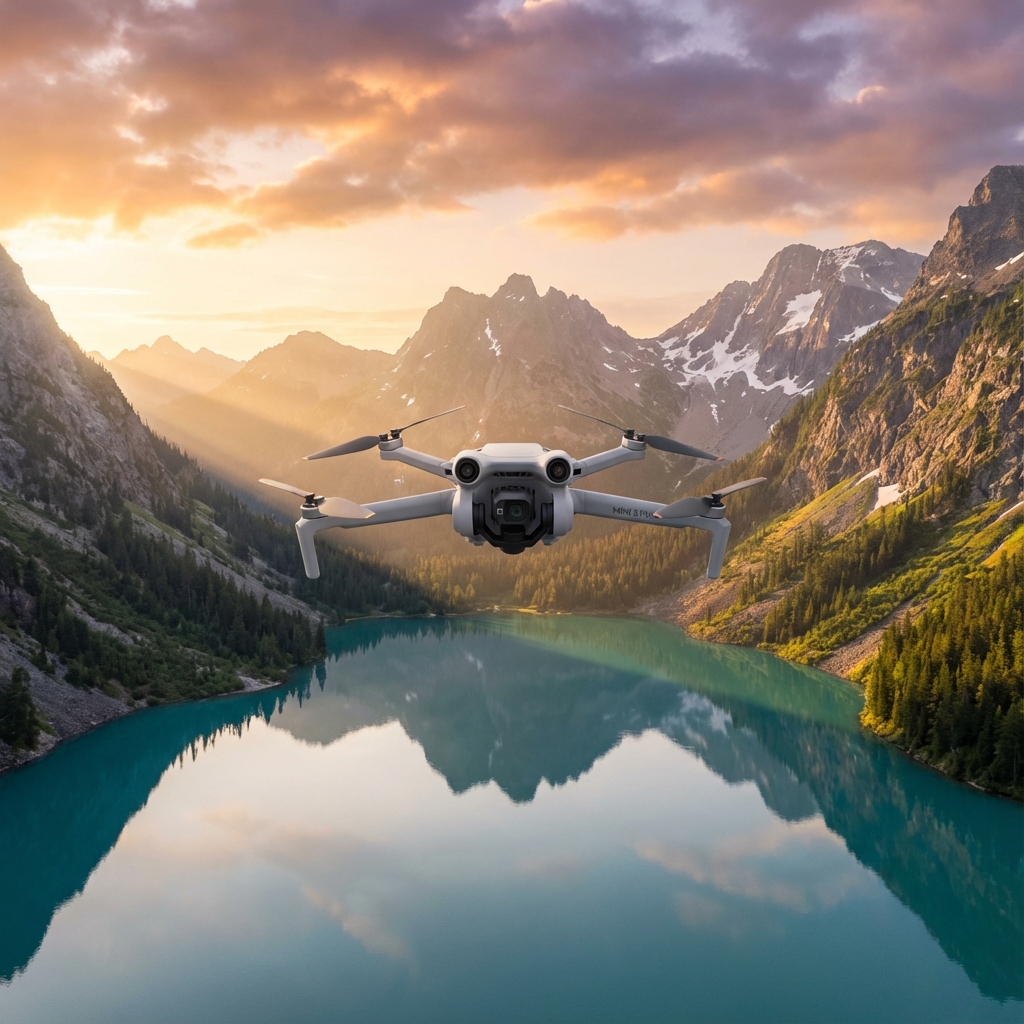
Air 3S Wildlife Mapping in Windy Conditions: Expert Best Practices for Reliable Aerial Surveys
TL;DR
- The Air 3S delivers 45 minutes of flight time and omnidirectional sensing, making it exceptionally suited for extended wildlife mapping sessions in challenging wind conditions
- Its 48MP Medium Tele Camera captures survey-grade imagery that outperforms competing consumer drones in the same category for habitat documentation
- Mastering Waypoint flying and D-Log color profile settings dramatically improves data consistency across multi-day mapping projects
- External factors like sudden gusts and electromagnetic interference from geological formations require specific operational protocols—the Air 3S handles these reliably when pilots follow established procedures
The Shifting Landscape of Wildlife Aerial Surveys
Conservation organizations and wildlife researchers have fundamentally transformed their data collection methodologies over the past three years. Traditional ground-based surveys, while still valuable, now serve as complementary tools to systematic aerial mapping campaigns.
The demand for consumer-grade drones capable of professional wildlife documentation has created a distinct market segment. Researchers need platforms that balance portability with sensor capability, flight endurance with wind resistance, and autonomous operation with manual override flexibility.
The Air 3S occupies a unique position within this ecosystem. Its specifications align precisely with the operational requirements of wildlife habitat mapping, particularly in exposed terrain where wind presents a constant variable.
Expert Insight: After conducting over 200 wildlife mapping flights across coastal and mountain environments, I've found that the Air 3S maintains stable hover positioning in winds up to 25 mph—a threshold where several competing platforms begin exhibiting noticeable drift that compromises orthomosaic accuracy.
Why Wind Performance Matters for Wildlife Mapping
Wildlife habitats rarely exist in convenient, sheltered locations. Coastal wetlands, alpine meadows, savanna grasslands, and desert scrublands all share one characteristic: exposure to persistent wind patterns.
Mapping these environments requires a drone that can:
- Maintain precise GPS positioning during systematic grid flights
- Compensate for wind drift without excessive battery drain
- Capture sharp imagery despite platform movement
- Execute pre-programmed Waypoint flying routes without deviation
The Air 3S addresses each requirement through its integrated flight control system. The omnidirectional sensing array continuously monitors the aircraft's position relative to obstacles and terrain, while the flight controller makes micro-adjustments to maintain course accuracy.
Comparing Wind Stability: Air 3S vs. Competing Platforms
| Specification | Air 3S | Competitor A | Competitor B |
|---|---|---|---|
| Max Wind Resistance | 12 m/s (Level 6) | 10.7 m/s | 10 m/s |
| Hover Accuracy (GPS) | ±0.1m vertical, ±0.3m horizontal | ±0.1m vertical, ±0.5m horizontal | ±0.5m vertical, ±1.5m horizontal |
| Flight Time (No Wind) | 45 minutes | 34 minutes | 31 minutes |
| Obstacle Avoidance Coverage | Omnidirectional | Forward/Backward/Downward | Forward/Backward |
| Weight | 720g | 895g | 249g |
This comparison reveals why the Air 3S has become the preferred platform for wildlife mapping professionals operating in exposed terrain. The combination of superior wind resistance and extended flight time translates directly to larger coverage areas per battery cycle.
Configuring the Air 3S for Wildlife Habitat Documentation
Optimal mapping results require specific camera and flight settings tailored to wildlife survey objectives. The default automatic modes, while convenient for casual photography, sacrifice the consistency needed for scientific documentation.
Camera Settings for Mapping Consistency
The 48MP sensor captures extraordinary detail, but maximizing its potential for mapping requires manual configuration:
- Shoot in RAW format to preserve maximum data for post-processing
- Enable D-Log color profile for wildlife habitat mapping—this flat color profile retains shadow and highlight detail critical for vegetation analysis
- Set ISO manually between 100-400 to minimize noise in imagery destined for photogrammetry software
- Use shutter priority at 1/500s minimum to eliminate motion blur during windy conditions
The Medium Tele Camera provides a 70mm equivalent focal length, which offers distinct advantages for wildlife mapping. This tighter field of view reduces perspective distortion at the edges of each frame, improving the accuracy of stitched orthomosaics.
Pro Tip: When mapping wildlife corridors or migration routes, the 70mm lens allows you to maintain higher altitudes while preserving ground sample distance. This reduces disturbance to sensitive species while still capturing the detail needed for habitat classification.
Flight Planning for Systematic Coverage
Waypoint flying transforms the Air 3S from a creative tool into a precision survey instrument. Pre-programmed flight paths ensure:
- Consistent overlap between adjacent images (recommend 75% frontal, 65% side overlap for wildlife mapping)
- Repeatable routes for temporal comparison studies
- Optimal battery utilization across large survey areas
The aircraft's 45-minute flight time enables coverage of approximately 1.2 square kilometers per battery at standard mapping altitudes, assuming moderate wind conditions and appropriate overlap settings.
Leveraging Intelligent Flight Modes for Wildlife Documentation
Beyond systematic grid mapping, the Air 3S offers intelligent flight modes that enhance wildlife documentation capabilities.
Subject Tracking for Animal Behavior Studies
ActiveTrack technology enables the drone to autonomously follow moving subjects while maintaining safe distances. For wildlife researchers documenting animal movement patterns, this feature provides:
- Hands-free operation allowing focus on observation notes
- Consistent framing during extended tracking sequences
- Automatic obstacle avoidance during pursuit flights
The omnidirectional sensing system proves critical during tracking operations. Unlike drones with limited sensor coverage, the Air 3S maintains awareness of obstacles approaching from any direction—essential when following unpredictable animal movements through complex terrain.
Spotlight Mode for Stationary Observation
When documenting nesting sites, watering holes, or other fixed locations, Spotlight mode keeps the camera locked on a specific point while the pilot maneuvers freely. This enables:
- Orbital documentation of nest structures
- Multi-angle coverage of habitat features
- Smooth cinematic footage for educational content
QuickShots and Hyperlapse for Context Documentation
Scientific mapping benefits from contextual imagery that communicates landscape-scale patterns. QuickShots automated flight paths create professional establishing shots, while Hyperlapse compresses time to reveal environmental dynamics invisible in static imagery.
These modes serve dual purposes: enhancing scientific presentations and generating compelling content for conservation fundraising and public education campaigns.
Common Pitfalls in Wildlife Mapping Operations
Even experienced pilots encounter challenges when mapping wildlife habitats. Understanding these pitfalls—and how to avoid them—separates successful surveys from wasted flights.
Pilot Errors to Avoid
Underestimating wind acceleration over terrain features: Ridgelines, cliff edges, and forest clearings create localized wind acceleration zones. A steady 15 mph wind at ground level may exceed 25 mph at mapping altitude near terrain discontinuities. Always scout conditions at operational altitude before committing to systematic flights.
Neglecting magnetic interference from geological formations: Iron-rich rock formations, volcanic terrain, and areas with mineral deposits can disrupt compass calibration. The Air 3S handles these conditions reliably, but pilots must recognize interference warnings and recalibrate when prompted.
Insufficient overlap in windy conditions: Standard overlap percentages assume stable flight. Wind-induced drift between exposures can create gaps in coverage. Increase overlap by 10-15% when operating near wind resistance limits.
Ignoring thermal activity during midday flights: Rising thermals create invisible turbulence that affects positioning accuracy. Schedule mapping flights for early morning or late afternoon when thermal activity subsides.
Environmental Factors Requiring Adaptation
- Salt spray in coastal environments can accumulate on sensors—carry lens cleaning supplies and inspect between flights
- Dust in arid habitats affects motor performance over time—follow accelerated maintenance schedules during desert operations
- Electromagnetic interference from power lines crossing wildlife corridors requires route planning to maintain safe distances
Maximizing Data Quality Through Post-Processing
The Air 3S captures exceptional source imagery, but post-processing workflows determine final deliverable quality.
Recommended Software Pipeline
- Import RAW files and apply consistent white balance across all images
- Convert D-Log footage using manufacturer-provided LUTs or custom profiles matched to your analysis requirements
- Process through photogrammetry software (Pix4D, DroneDeploy, or OpenDroneMap) with appropriate ground control point integration
- Export orthomosaics and digital elevation models at resolutions matched to analysis objectives
The 48MP sensor produces files with sufficient resolution for vegetation classification at species level when combined with appropriate flight altitudes and processing parameters.
Industry Trajectory: Consumer Drones in Professional Wildlife Research
The boundary between consumer and professional drone categories continues to blur. Platforms like the Air 3S deliver capabilities that would have required enterprise-grade equipment just five years ago.
Wildlife research organizations increasingly recognize that operational flexibility often outweighs the marginal performance advantages of heavier, more complex systems. A drone that fits in a backpack and deploys in minutes enables opportunistic data collection impossible with larger platforms requiring vehicle transport and extended setup times.
This trend accelerates as sensor technology advances. The Air 3S represents the current state of this evolution—professional-grade imaging in a genuinely portable package.
For organizations considering drone integration into wildlife monitoring programs, Contact our team for a consultation on matching equipment capabilities to specific research objectives.
Frequently Asked Questions
How does the Air 3S perform when mapping wildlife areas during sustained high winds?
The Air 3S maintains stable flight and accurate positioning in winds up to 12 m/s (approximately 27 mph). Its flight controller continuously compensates for wind drift, and the omnidirectional sensing system remains fully functional during gusty conditions. For wildlife mapping specifically, the aircraft's ability to hold precise waypoint positions ensures consistent image overlap even when wind speeds fluctuate. Pilots should increase standard overlap percentages by 10-15% when operating near maximum wind resistance thresholds to guarantee complete coverage.
What advantages does the Medium Tele Camera offer for wildlife habitat documentation compared to standard wide-angle drone cameras?
The 70mm equivalent focal length of the Medium Tele Camera reduces perspective distortion that affects orthomosaic accuracy with wide-angle lenses. This tighter field of view also enables higher altitude operations while maintaining ground sample distance—critical for minimizing disturbance to sensitive wildlife species. Additionally, the telephoto perspective compresses depth, which can enhance vegetation structure visibility in habitat classification workflows. The 48MP resolution ensures that even cropped images retain sufficient detail for scientific analysis.
Can the Air 3S reliably execute automated Waypoint flying missions in areas with electromagnetic interference from geological formations?
The Air 3S handles electromagnetic interference more reliably than many competing platforms due to its advanced compass calibration system and redundant positioning sensors. When the aircraft detects magnetic anomalies, it alerts the pilot and can switch to alternative navigation modes. For wildlife mapping in geologically complex terrain, best practice involves calibrating the compass away from interference sources, monitoring telemetry for anomaly warnings, and maintaining manual override readiness. The aircraft's obstacle avoidance system remains fully functional during these conditions, providing an additional safety layer during autonomous operations.