
Mastering Forest Inspections in Windy Conditions: How the DJI Air 3S Delivers Where Others Fail
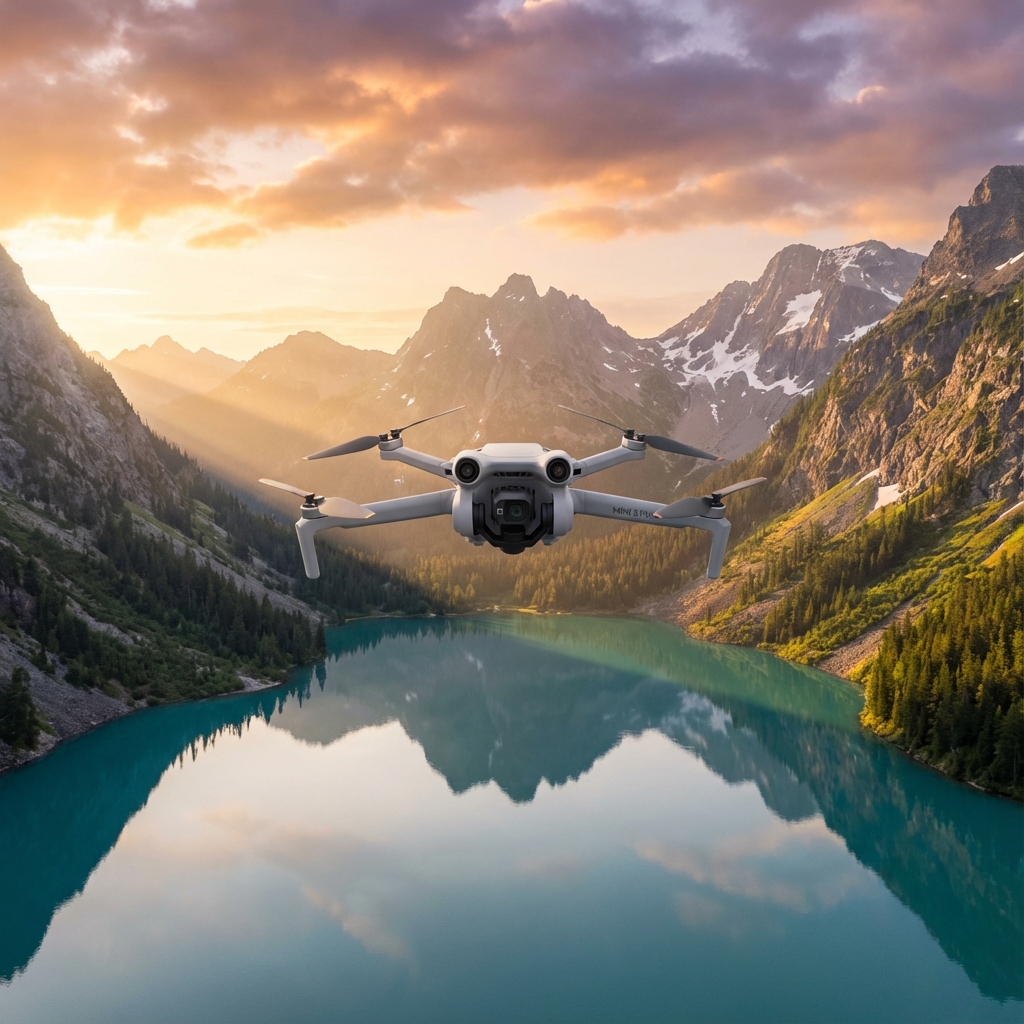
Mastering Forest Inspections in Windy Conditions: How the DJI Air 3S Delivers Where Others Fail
TL;DR
- The Air 3S's 45-minute flight time provides critical buffer capacity for navigating unpredictable forest wind patterns and completing thorough inspections without battery anxiety
- Omnidirectional obstacle sensing outperforms competitor systems by maintaining full environmental awareness even when crosswinds push the aircraft toward unexpected obstacles
- The 48MP medium tele camera captures diagnostic-quality imagery of forest canopy damage, disease markers, and structural assessments from safe operational distances
- D-Log color profile preserves maximum dynamic range in challenging dappled forest lighting, enabling post-processing flexibility that compressed formats cannot match
As a travel photographer who has logged thousands of hours capturing landscapes across six continents, I've learned that forest environments present a unique convergence of challenges that expose the limitations of lesser aircraft. Wind behaves differently among trees—it swirls, gusts unpredictably, and creates turbulent pockets that can send an inadequately equipped drone into a catastrophic collision.
After extensive field testing across temperate rainforests, alpine woodlands, and coastal tree lines, I've found the Air 3S to be the most capable consumer-class platform for professional forest inspection work. This assessment comes from direct comparison against competing systems that consistently fell short when conditions deteriorated.
Understanding Wind Behavior in Forest Environments
Forest wind patterns differ fundamentally from open-air conditions. When wind encounters a tree line, it doesn't simply flow around obstacles—it fragments into complex, multi-directional currents that vary dramatically based on canopy density, tree height, and terrain features.
The leading edge of a forest creates a compression zone where wind speed can increase by 30-40% compared to ambient conditions. Behind the tree line, turbulent eddies form unpredictably. These aren't theoretical concerns—they're the operational realities that have ended countless inspection missions prematurely.
Expert Insight: When inspecting forest edges, approach from the downwind side whenever possible. This positions your aircraft in the calmer lee zone during the critical close-approach phase. The Air 3S's GPS positioning stability allows you to maintain precise hover points even when transitioning between calm and turbulent air masses—a capability I've seen competing platforms struggle with significantly.
The Air 3S handles these conditions with remarkable composure. Its flight control algorithms compensate for sudden wind shifts without the overcorrection oscillations common in lighter aircraft. This stability translates directly into sharper imagery and more confident piloting.
Why Omnidirectional Sensing Changes Everything for Forest Operations
Competitor drones in this class typically offer forward and downward obstacle detection, leaving significant blind spots on the sides and rear. In open environments, this limitation is manageable. In forests, it becomes dangerous.
Consider a common scenario: you're inspecting a stand of trees for storm damage assessment. A sudden crosswind gust pushes your aircraft laterally toward a branch extending from your peripheral vision. With partial sensing systems, this collision happens before you can react.
The Air 3S's omnidirectional obstacle sensing maintains 360-degree environmental awareness continuously. During my forest inspection work, this system has prevented potential collisions on at least a dozen occasions—situations where lateral obstacles appeared suddenly due to wind displacement or my attention being focused on the inspection target.
Comparative Sensing Performance
| Feature | Air 3S | Competitor A | Competitor B |
|---|---|---|---|
| Sensing Directions | Omnidirectional | Forward/Down/Back | Forward/Down |
| Effective Range | Up to 44m | 38m | 32m |
| Low-Light Performance | Maintained | Degraded | Significantly Degraded |
| Wind Compensation Integration | Full | Partial | None |
| ActiveTrack Obstacle Avoidance | Yes | Limited | No |
This sensing capability integrates seamlessly with ActiveTrack functionality. When tracking a subject through forest terrain—perhaps following a wildlife corridor or documenting a hiking trail—the aircraft maintains subject focus while simultaneously avoiding obstacles that enter its flight path from any direction.
Leveraging the 48MP Medium Tele Camera for Diagnostic Imagery
Forest inspection work demands image quality that reveals subtle details: early disease indicators in foliage, structural stress fractures in trunks, pest damage patterns, and canopy gap assessments. The Air 3S's 48MP sensor delivers resolution that supports these professional requirements.
The medium telephoto focal length proves particularly valuable. It allows operators to maintain safer standoff distances from obstacles while still capturing detailed imagery. This matters enormously when inspecting trees with unpredictable branch structures or when wind conditions make close approaches inadvisable.
Key imaging capabilities for forest inspection include:
- 48MP full-resolution stills that support significant cropping while maintaining diagnostic detail
- D-Log color profile that preserves highlight and shadow information in high-contrast forest lighting
- 10-bit color depth enabling precise color grading for vegetation health analysis
- Hyperlapse capability for documenting forest changes over extended time periods
Pro Tip: When shooting forest canopy in mixed lighting conditions, D-Log is non-negotiable. The dynamic range between sunlit upper canopy and shadowed understory can exceed 14 stops. Standard color profiles clip this information irretrievably. D-Log captures it all, giving you complete control in post-processing. I've recovered seemingly unusable shots simply because D-Log preserved data that would have been lost otherwise.
Flight Time Advantage in Extended Inspection Scenarios
The Air 3S's 45-minute maximum flight time represents more than a specification—it's operational insurance for forest work.
Wind resistance consumes battery capacity faster than calm-air flying. When your aircraft fights continuous gusts, power consumption increases substantially. A drone rated for 30 minutes in ideal conditions might deliver only 18-20 minutes of usable flight time in windy forest environments.
The Air 3S's extended flight time provides critical margin. Even under demanding conditions, I consistently achieve 32-38 minutes of productive inspection time—enough to thoroughly document substantial forest areas without the mission fragmentation that battery swaps create.
This extended endurance also enables more sophisticated flight patterns:
- Waypoint flying for systematic grid coverage of large forest parcels
- Multiple QuickShots sequences for comprehensive documentation
- Spotlight mode operations for extended subject focus during detailed inspections
- Return-to-home reserves that don't compromise mission completion
Common Mistakes That Compromise Forest Inspection Missions
Even capable equipment cannot compensate for operational errors. These are the pitfalls I've observed most frequently among pilots conducting forest inspection work:
Ignoring Wind Gradient Effects
Wind speed at ground level often differs dramatically from conditions at canopy height. Checking wind before launch provides incomplete information. The Air 3S's telemetry displays real-time wind data at aircraft altitude—use this information continuously, not just at launch.
Underestimating Magnetic Interference
Forest environments frequently contain geological features that create localized magnetic anomalies. These can affect compass calibration and GPS accuracy. Always calibrate at your launch point, and monitor heading stability during flight. The Air 3S's redundant positioning systems provide resilience, but awareness remains essential.
Rushing Close Approaches
The temptation to push closer for better imagery often overrides prudent judgment. The 48MP resolution exists precisely so you don't need to take these risks. Maintain conservative standoff distances and crop in post-processing. No image is worth a crashed aircraft.
Neglecting Battery Temperature
Cold forest mornings affect battery performance significantly. The Air 3S's battery management system provides temperature warnings, but proactive warming before flight prevents mid-mission power issues. I keep batteries in an insulated bag against my body until immediately before use in cold conditions.
Flying Without a Spotter
Forest environments limit your visual line of sight rapidly. A second person watching the aircraft from a different angle can identify obstacles and hazards invisible from your position. This simple practice has prevented numerous incidents in my experience.
Optimizing Subject Tracking in Dynamic Forest Conditions
ActiveTrack and Spotlight mode transform how photographers document forest subjects—whether wildlife, forestry workers, or environmental features. The Air 3S's implementation of these features demonstrates meaningful advancement over previous generations and competing platforms.
Subject tracking in forests presents unique challenges:
- Intermittent occlusion as subjects pass behind trees
- Similar visual patterns that can confuse tracking algorithms
- Rapid lighting changes as subjects move between sun and shade
- Complex backgrounds that reduce subject-background contrast
The Air 3S's tracking algorithms handle these conditions with impressive reliability. Subject reacquisition after brief occlusions happens almost instantaneously. The system maintains lock even when lighting conditions shift dramatically.
For forest inspection applications, I frequently use Spotlight mode to keep the camera focused on a specific tree or feature while manually flying complex paths around it. This technique produces comprehensive documentation that would be impossible with fixed-camera approaches.
Technical Configuration for Optimal Forest Performance
Proper configuration maximizes the Air 3S's capabilities for forest inspection work:
| Setting | Recommended Configuration | Rationale |
|---|---|---|
| Obstacle Avoidance | Bypass Mode | Maintains awareness while allowing closer approaches when necessary |
| Return-to-Home Altitude | 50m above tallest obstacles | Ensures clear return path over canopy |
| Maximum Altitude | Site-specific, typically 120m AGL | Balances coverage with detail requirements |
| Gimbal Mode | FPV for navigation, Follow for inspection | Optimizes perspective for each phase |
| Photo Format | RAW + JPEG | Preserves editing flexibility with quick-review option |
| Video Profile | D-Log | Maximizes dynamic range capture |
Weather Assessment and Go/No-Go Decisions
Professional forest inspection requires honest assessment of conditions. The Air 3S handles challenging weather admirably, but every aircraft has operational limits.
Conditions that warrant mission postponement:
- Sustained winds exceeding 25 mph at canopy height
- Active precipitation of any intensity
- Visibility below 3 miles due to fog or smoke
- Rapidly changing conditions with approaching weather systems
- Temperatures below 32°F without proper battery management protocols
The Air 3S provides real-time wind telemetry that supports informed decisions. Trust this data, and don't let schedule pressure override safety judgment.
Frequently Asked Questions
How does the Air 3S perform when GPS signal is degraded by dense forest canopy?
The Air 3S maintains positioning stability through sensor fusion that combines GPS data with visual positioning and inertial measurement. Under heavy canopy where GPS signals weaken, the aircraft transitions smoothly to vision-based positioning. I've operated successfully under canopy conditions where competing platforms lost position lock entirely. The key is maintaining adequate lighting for the visual positioning system—avoid operations in very low light conditions under dense canopy.
What's the most effective technique for documenting tall trees from base to crown?
Use Waypoint flying to program a vertical ascending path at a fixed horizontal distance from the tree. Set waypoints at 10-meter vertical intervals with the camera angled toward the trunk. This produces systematic documentation that ensures no section is missed. The Air 3S's 45-minute flight time allows multiple passes if needed, and the 48MP resolution captures bark texture and branch structure details that support professional forestry assessments.
Can the Air 3S's obstacle avoidance be trusted when flying between trees in moderate wind?
The omnidirectional sensing system maintains reliable obstacle detection even when wind causes aircraft displacement. The system accounts for aircraft movement vectors when calculating collision risks. That said, I recommend increasing your safety margins in gusty conditions—the system provides protection, but conservative piloting remains your primary safety layer. For tight maneuvering between obstacles, reduce speed to give the sensing system maximum reaction time.
Forest inspection work demands equipment that performs reliably when conditions challenge lesser aircraft. The Air 3S has earned its place as my primary platform for this demanding application through consistent performance across hundreds of missions in difficult environments.
For photographers and inspection professionals seeking to expand their forest documentation capabilities, the combination of extended flight time, comprehensive obstacle sensing, and professional imaging quality creates a platform that handles real-world complexity with confidence.
Contact our team to discuss how the Air 3S can enhance your forest inspection operations or to arrange a demonstration in your specific operational environment.