
Air 3S Wildlife Scouting: High Altitude Best Practices
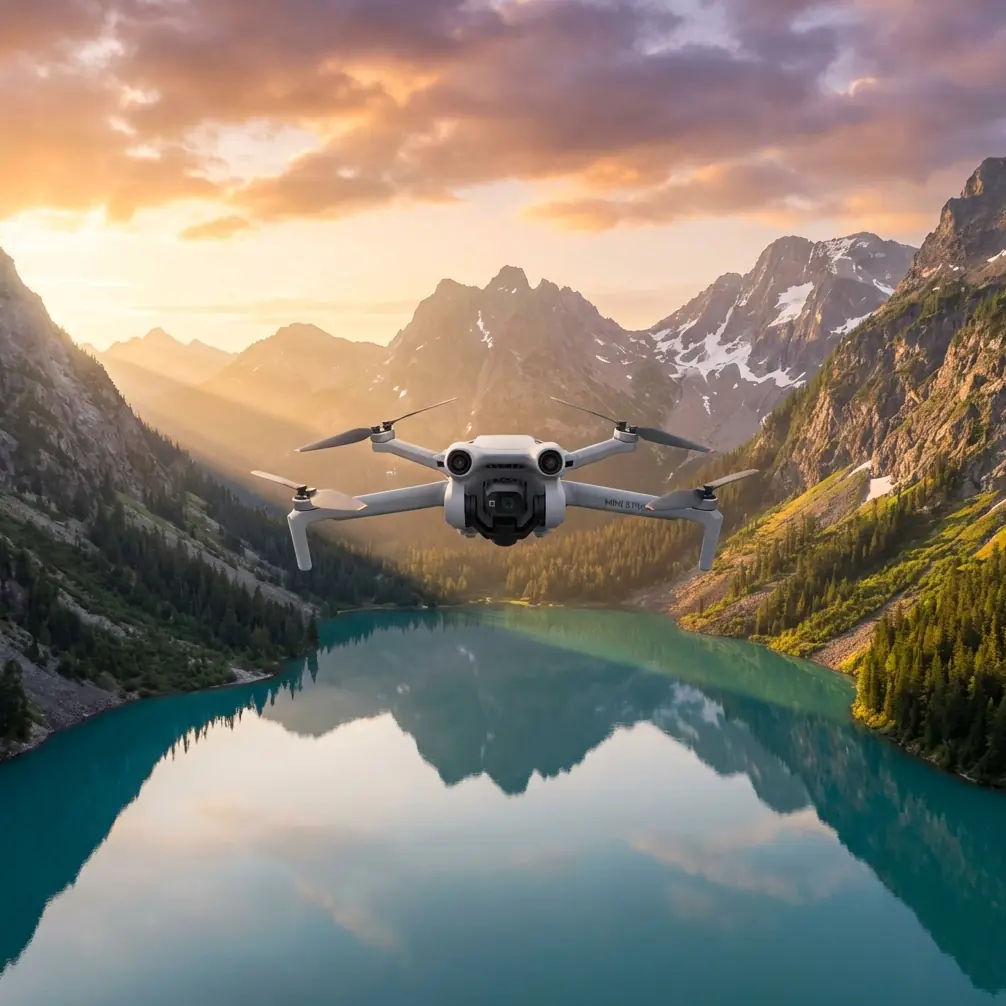
Air 3S Wildlife Scouting: High Altitude Best Practices
META: Master high-altitude wildlife scouting with the Air 3S. Learn expert techniques for obstacle avoidance, subject tracking, and capturing stunning footage above treeline.
TL;DR
- The Air 3S excels at wildlife scouting above 10,000 feet thanks to its enhanced obstacle avoidance and extended transmission range
- ActiveTrack 6.0 maintains lock on moving animals even through partial obstructions like sparse tree cover
- D-Log color profile preserves 13+ stops of dynamic range for challenging alpine lighting conditions
- Third-party ND filter systems dramatically improve footage quality in bright, high-altitude environments
Why High-Altitude Wildlife Scouting Demands Specialized Techniques
Scouting wildlife above treeline presents unique challenges that ground-based methods simply cannot address. The Air 3S solves critical problems—limited visibility, unpredictable animal movement, and harsh lighting—with technology specifically designed for demanding environments.
I've spent three seasons documenting elk migration patterns, mountain goat populations, and golden eagle nesting sites across the Rocky Mountains. This guide distills hundreds of flight hours into actionable techniques you can apply immediately.
Understanding Air 3S Performance at Altitude
Thin air affects drone performance in ways many pilots underestimate. At 12,000 feet, air density drops by roughly 30% compared to sea level. This directly impacts lift, battery efficiency, and cooling systems.
The Air 3S compensates through intelligent motor management and adaptive power distribution. However, understanding these limitations helps you plan more effective scouting missions.
Battery Considerations Above Treeline
Expect 15-20% reduced flight time at elevations exceeding 10,000 feet. Cold temperatures compound this effect—I've observed up to 35% reduction during early morning autumn flights when temperatures hover near freezing.
Key strategies for maximizing flight time:
- Pre-warm batteries in an insulated case with hand warmers
- Launch with batteries at minimum 25°C internal temperature
- Plan shorter mission segments with buffer time for return
- Carry at least three fully charged batteries per scouting session
- Monitor battery temperature warnings actively during flight
Expert Insight: I keep batteries inside my jacket against my body during the hike to scouting locations. This simple technique consistently adds 4-6 minutes of flight time compared to cold-starting batteries from a backpack.
Mastering Obstacle Avoidance in Alpine Terrain
The Air 3S features omnidirectional obstacle sensing with 38-meter forward detection range. In high-altitude environments with sparse vegetation and rocky outcroppings, this system becomes your primary safety net.
Configuring Sensors for Open Terrain
Alpine environments present a paradox: fewer obstacles overall, but those present are often harder to detect. Weathered rock faces, thin branches, and guy wires from weather stations can challenge even advanced sensing systems.
Recommended obstacle avoidance settings for wildlife scouting:
- Set avoidance behavior to Brake rather than Bypass near cliff edges
- Enable APAS 5.0 for automatic path planning during tracking shots
- Reduce maximum speed to 12 m/s when operating near rocky terrain
- Activate downward sensors even during stationary hovers
The system struggles with thin branches and wire obstacles. During one memorable flight tracking a herd of bighorn sheep, I nearly lost the aircraft to an unmarked cable spanning a canyon. Now I always conduct a slow, manual survey of new areas before enabling autonomous tracking modes.
Subject Tracking for Wildlife Documentation
ActiveTrack 6.0 represents a significant advancement for wildlife photographers. The system recognizes animal shapes and predicts movement patterns with remarkable accuracy.
Initiating Tracking on Wild Animals
Unlike human subjects, wildlife won't wait for you to draw a selection box. Speed matters enormously.
Effective tracking initiation sequence:
- Position the drone 50-80 meters from the subject before attempting lock
- Use the quick-select tap rather than drawing a box
- Confirm tracking lock before reducing altitude or closing distance
- Set tracking mode to Parallel for most wildlife scenarios
- Enable Spotlight mode when you need manual flight control with automatic gimbal tracking
Pro Tip: Wildlife often freezes when first detecting the drone. Use this 3-5 second window to establish tracking lock before the animal moves. Once locked, the system maintains connection even through erratic escape movements.
Tracking Behavior Comparison
| Tracking Mode | Best Use Case | Wildlife Application |
|---|---|---|
| Trace | Following behind subject | Documenting migration paths |
| Parallel | Maintaining side angle | Capturing running gait analysis |
| Spotlight | Manual flight with auto-gimbal | Complex terrain navigation |
| POI | Circling stationary subject | Nesting site documentation |
Leveraging QuickShots for Efficient Scouting
QuickShots automate complex camera movements, freeing your attention for wildlife observation. In scouting contexts, these automated sequences help document habitat features and animal locations systematically.
Most Useful QuickShots for Wildlife Work
Dronie creates instant context shots showing animal position relative to terrain features. I use this constantly for documenting elk bedding areas and water sources.
Circle provides comprehensive views of nesting sites without requiring precise manual stick control. The consistent movement also seems to disturb wildlife less than erratic manual flying.
Helix combines outward movement with circling, excellent for revealing how animals use landscape features for shelter or escape routes.
Avoid Rocket and Boomerang for wildlife work—the rapid altitude changes and close approaches typically cause animals to flee.
Creating Hyperlapse Documentation
Hyperlapse mode transforms hours of landscape observation into compelling time-compressed sequences. For wildlife scouting, this technique reveals movement patterns invisible in real-time observation.
Hyperlapse Settings for Wildlife Habitat
Configure Hyperlapse with these parameters for optimal results:
- Interval: 2 seconds for animal movement, 5 seconds for weather patterns
- Duration: Minimum 20 minutes of capture for usable sequences
- Mode: Waypoint for complex flight paths, Free for stationary observation
- Resolution: 4K for maximum flexibility in post-production
Battery limitations make extended Hyperlapse challenging at altitude. I've developed a technique using multiple batteries with carefully matched waypoints to create seamless multi-hour sequences.
The D-Log Advantage in Harsh Alpine Light
High-altitude environments present extreme dynamic range challenges. Bright snow, dark rock shadows, and intense UV radiation create scenes that exceed most cameras' native capabilities.
D-Log color profile captures 13.7 stops of dynamic range, preserving detail in both shadowed canyon walls and sunlit snowfields. This flexibility proves essential when wildlife moves between lighting zones.
D-Log Workflow Recommendations
- Expose for highlights, protecting bright areas from clipping
- Accept slightly underexposed shadows—these recover cleanly in post
- Use zebras set to 95% to monitor highlight exposure
- Apply a monitoring LUT for accurate field preview
The flat D-Log image looks terrible on the controller screen. Don't let this discourage you—the recovered footage reveals remarkable detail.
Third-Party Accessories That Transform Capability
The PolarPro VND filter system changed my high-altitude workflow completely. Variable ND filtration from 2-5 stops allows proper exposure control without constantly landing to swap fixed filters.
At 11,000 feet on a clear day, light intensity requires ND16 or stronger filtration to maintain cinematic shutter speeds. The variable system lets me adjust instantly as clouds pass or I transition between shadowed and sunlit areas.
Additional accessories worth considering:
- Freewell ND/PL combo filters for reducing glare on water and wet rock
- Lume Cube strobe mount for dawn/dusk visibility
- Haversack landing pad with integrated tie-downs for windy conditions
- Signal boosting antenna upgrades for extended range in canyon terrain
Common Mistakes to Avoid
Flying too close, too fast: Wildlife tolerance varies dramatically by species and season. Approach slowly and observe behavior. Ear positioning, stance changes, and interrupted feeding indicate stress.
Ignoring wind patterns: Mountain winds shift rapidly. What begins as a gentle tailwind can become an insurmountable headwind during return flight. Always maintain 40% battery reserve at altitude.
Overlooking airspace restrictions: Many prime wildlife areas fall within national park boundaries or wilderness areas with drone prohibitions. Verify regulations before every flight.
Neglecting sensor calibration: Magnetic interference from mineral deposits affects compass accuracy. Calibrate before each session in new locations.
Forgetting backup power: Your controller and phone drain faster in cold conditions. Carry external batteries for both devices.
Frequently Asked Questions
What is the maximum recommended altitude for Air 3S wildlife scouting?
The Air 3S performs reliably up to 6,000 meters above sea level according to specifications, though I recommend staying below 4,500 meters for consistent performance. Above this elevation, battery efficiency drops significantly and motor cooling becomes problematic during aggressive maneuvers. Always check local regulations—many jurisdictions restrict maximum flight altitude regardless of drone capability.
How close can I fly to wildlife without causing disturbance?
Distance requirements vary by species, season, and individual animal habituation. As a baseline, maintain minimum 100 meters horizontal distance from large mammals and 200 meters from nesting raptors. Observe animal behavior constantly—any change in activity indicates you've approached too closely. During breeding season or with young animals present, double these distances.
Can the Air 3S obstacle avoidance detect birds in flight?
The obstacle avoidance system can detect larger birds like eagles or herons at distances of 10-15 meters, providing minimal reaction time. Smaller birds typically don't trigger sensors until dangerously close. When operating in areas with significant bird activity, reduce maximum speed and maintain direct visual observation. Consider avoiding flight during peak raptor hunting hours in areas with known populations.
Ready for your own Air 3S? Contact our team for expert consultation.