
Air 3S Vineyard Scouting: Low-Light Expert Guide
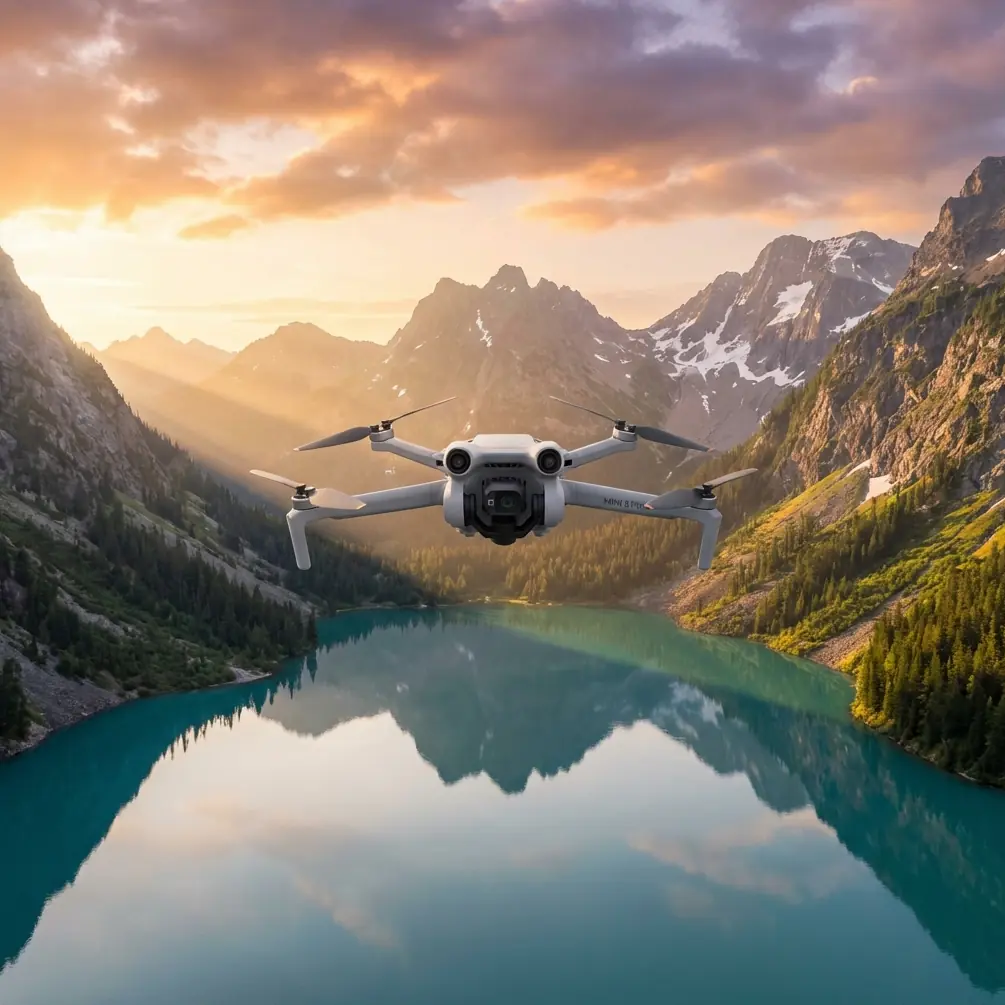
Air 3S Vineyard Scouting: Low-Light Expert Guide
META: Master low-light vineyard scouting with the Air 3S drone. Expert tutorial covers obstacle avoidance, D-Log settings, and pro techniques for stunning aerial footage.
TL;DR
- The Air 3S's 1-inch CMOS sensor captures exceptional detail during golden hour and twilight vineyard scouting sessions
- Omnidirectional obstacle avoidance prevents collisions with trellises, posts, and irrigation equipment in complex vineyard terrain
- D-Log color profile preserves 14+ stops of dynamic range for professional-grade color grading in post-production
- ActiveTrack 6.0 maintains smooth subject tracking even when electromagnetic interference disrupts GPS signals
Why Low-Light Vineyard Scouting Demands Specialized Equipment
Vineyard managers and photographers face a unique challenge: the best light for capturing vine health, terrain analysis, and marketing footage occurs during the 30 minutes before sunrise and 45 minutes after sunset. Standard consumer drones struggle in these conditions, producing grainy footage that obscures critical details like leaf discoloration, pest damage, and irrigation patterns.
The Air 3S addresses this gap with hardware specifically engineered for challenging lighting scenarios. Its f/1.8 aperture gathers significantly more light than competitors, while the larger sensor reduces noise at higher ISO settings.
I've spent three seasons photographing vineyards across Napa, Sonoma, and the Willamette Valley. The difference between adequate equipment and professional-grade tools becomes obvious when clients review deliverables—and when you're navigating between trellis rows at dusk.
Essential Pre-Flight Configuration for Vineyard Operations
Sensor and Exposure Settings
Before launching, configure your Air 3S for the specific lighting conditions you'll encounter:
- Set ISO limits between 100-1600 for optimal noise performance
- Enable auto exposure bracketing for HDR capture during high-contrast sunset conditions
- Switch to D-Log M color profile to maximize dynamic range
- Configure shutter speed no lower than 1/60s to prevent motion blur during flight
The D-Log profile appears flat and desaturated in-camera, but this preserves highlight and shadow detail that standard color profiles clip permanently. You'll recover this information during post-processing.
Obstacle Avoidance Calibration
Vineyards present a dense obstacle environment that demands precise sensor calibration:
- Perform vision sensor calibration before each session using the DJI Fly app
- Set obstacle avoidance sensitivity to "Aggressive" in complex terrain
- Enable APAS 5.0 (Advanced Pilot Assistance Systems) for automatic path planning
- Configure minimum obstacle distance to 3 meters when flying between rows
Expert Insight: Vineyard wire trellises are notoriously difficult for obstacle sensors to detect. The thin gauge wire reflects minimal light, especially during low-light conditions. Always maintain visual line of sight and fly at reduced speeds—no faster than 5 m/s—when navigating trellis systems.
Handling Electromagnetic Interference in Agricultural Settings
Agricultural operations frequently generate electromagnetic interference (EMI) that disrupts drone communications and GPS accuracy. Irrigation pump motors, electric fencing, and nearby power transmission lines create invisible hazards that can cause signal dropouts or erratic flight behavior.
Antenna Positioning Technique
During a recent shoot at a Sonoma County vineyard, I experienced significant signal degradation near an irrigation pump house. The Air 3S controller's signal strength dropped from four bars to one within seconds of approaching the structure.
The solution required manual antenna adjustment:
- Rotate the controller so antenna faces directly toward the aircraft
- Maintain antenna orientation perpendicular to your body, not parallel
- Position yourself at least 15 meters from metal structures and electrical equipment
- If interference persists, increase altitude to 30+ meters to improve line-of-sight signal path
The Air 3S uses OcuSync 4.0 transmission, which automatically switches between 2.4GHz and 5.8GHz frequencies to avoid interference. However, physical antenna positioning remains critical for maintaining the 12km maximum transmission range in challenging RF environments.
GPS Signal Recovery Procedures
When GPS accuracy degrades due to EMI or terrain masking:
- Enable vision positioning as a backup navigation system
- Activate Return to Home point update to lock current position before entering problem areas
- Use manual flight mode with obstacle avoidance enabled rather than relying on GPS-dependent automated features
- Monitor the satellite count indicator—maintain minimum 12 satellites for reliable positioning
Subject Tracking for Dynamic Vineyard Content
ActiveTrack 6.0 transforms the Air 3S into a capable cinematography tool for capturing workers, vehicles, and equipment moving through vineyard rows.
Configuring ActiveTrack for Agricultural Subjects
- Select Trace mode for following subjects from behind
- Use Parallel mode for side-angle tracking shots along row corridors
- Enable Spotlight mode when you need manual flight control while maintaining subject framing
- Set tracking sensitivity to "Smooth" for professional-looking footage without jerky corrections
The system recognizes and tracks:
- Humans (workers, tour groups, winemakers)
- Vehicles (ATVs, tractors, harvest equipment)
- Animals (for wildlife documentation in organic vineyards)
Pro Tip: When tracking subjects moving between trellis rows, position the Air 3S 5-8 meters above the canopy rather than at subject level. This altitude provides the obstacle avoidance system sufficient reaction time while maintaining compelling composition.
QuickShots and Hyperlapse for Marketing Content
Vineyard clients increasingly request dynamic footage for websites, social media, and investor presentations. The Air 3S's automated flight modes deliver professional results without requiring advanced piloting skills.
QuickShots Mode Selection
| QuickShot Mode | Best Vineyard Application | Duration | Recommended Settings |
|---|---|---|---|
| Dronie | Revealing vineyard scale from single vine to full property | 15 seconds | Start low, end at 60m altitude |
| Circle | Showcasing central features (tasting rooms, heritage vines) | 20 seconds | 15m radius, medium speed |
| Helix | Dramatic reveals combining vertical and orbital movement | 25 seconds | 20m radius, ascending |
| Rocket | Emphasizing row patterns and geometric planting | 10 seconds | Straight vertical, 40m max |
| Boomerang | Social media clips of workers or harvest activities | 12 seconds | Tight radius, fast speed |
Hyperlapse Configuration
Hyperlapse captures the passage of time across vineyard landscapes—fog rolling through valleys, shadows moving across hillsides, or harvest crews working through rows.
- Free mode: Manual flight path for maximum creative control
- Circle mode: Orbiting a fixed point while capturing time-lapse frames
- Course Lock mode: Maintaining consistent heading while flying linear paths
- Waypoint mode: Pre-programmed flight paths for repeatable results
Configure 2-second intervals for smooth playback at 30fps, resulting in 15x speed increase in final footage. For dramatic sunrise or sunset sequences, extend intervals to 5 seconds for 37.5x acceleration.
Technical Specifications Comparison
| Feature | Air 3S | Previous Generation | Professional Cinema Drones |
|---|---|---|---|
| Sensor Size | 1-inch CMOS | 1/1.3-inch | Full Frame |
| Maximum ISO | 12800 | 6400 | 25600 |
| Aperture | f/1.8 | f/2.8 | f/2.8-4.0 |
| Video Resolution | 4K/60fps | 4K/30fps | 6K/30fps |
| Dynamic Range | 14+ stops (D-Log) | 12.8 stops | 15+ stops |
| Obstacle Sensors | Omnidirectional | Forward/Backward/Downward | Limited |
| Flight Time | 46 minutes | 34 minutes | 25-30 minutes |
| Weight | 720g | 595g | 1200g+ |
The Air 3S occupies a strategic position between consumer convenience and professional capability—lightweight enough for spontaneous deployment while delivering image quality that satisfies commercial clients.
Common Mistakes to Avoid
Flying too fast between trellis rows: The obstacle avoidance system requires processing time. Speeds exceeding 5 m/s in confined spaces risk collisions before the system can react.
Ignoring wind patterns in valley vineyards: Valleys channel wind unpredictably. The Air 3S handles winds up to 12 m/s, but turbulence near hillsides and tree lines creates sudden gusts that destabilize footage and drain batteries faster.
Using standard color profiles for professional work: Shooting in "Normal" or "Vivid" modes bakes exposure decisions into your footage permanently. D-Log requires extra post-processing time but preserves creative flexibility.
Neglecting ND filters during golden hour: Even in low light, the Air 3S's sensitive sensor may require ND8 or ND16 filters to achieve cinematic shutter speeds (1/60s for 30fps, 1/120s for 60fps).
Launching without checking for agricultural aircraft: Crop dusters and helicopter sprayers operate at low altitudes with limited visibility. Always contact vineyard management about scheduled aerial applications before flying.
Forgetting to update Return to Home altitude: Default RTH altitude may be lower than surrounding obstacles. Set RTH to minimum 40 meters in vineyard environments with trees, buildings, and power lines.
Frequently Asked Questions
Can the Air 3S detect vineyard trellis wires reliably?
The omnidirectional obstacle avoidance system struggles with thin wires, especially in low-light conditions when sensor performance decreases. Trellis wires measuring less than 5mm diameter may not trigger avoidance responses. Always fly above canopy height or maintain manual control when navigating wire systems. The downward vision sensors provide better detection than forward-facing sensors for horizontal wires.
What battery strategy works best for extended vineyard scouting sessions?
Carry minimum three batteries for professional sessions. The Air 3S's 46-minute flight time degrades in cold morning conditions—expect 35-38 minutes realistically during dawn shoots. Keep spare batteries warm in an insulated bag or vehicle until needed. The Fly More combo's charging hub prioritizes batteries sequentially, fully charging one before starting the next.
How do I maintain consistent exposure during rapidly changing twilight conditions?
Enable auto exposure but lock it periodically using the AE-L function when you achieve desired exposure. For critical shots, switch to manual exposure and adjust ISO incrementally as light changes. Shooting in D-Log provides approximately 2 additional stops of recovery latitude in post-processing, giving you margin for exposure errors during challenging lighting transitions.
Ready for your own Air 3S? Contact our team for expert consultation.