
Expert Coastal Venue Inspections with the Air 3S
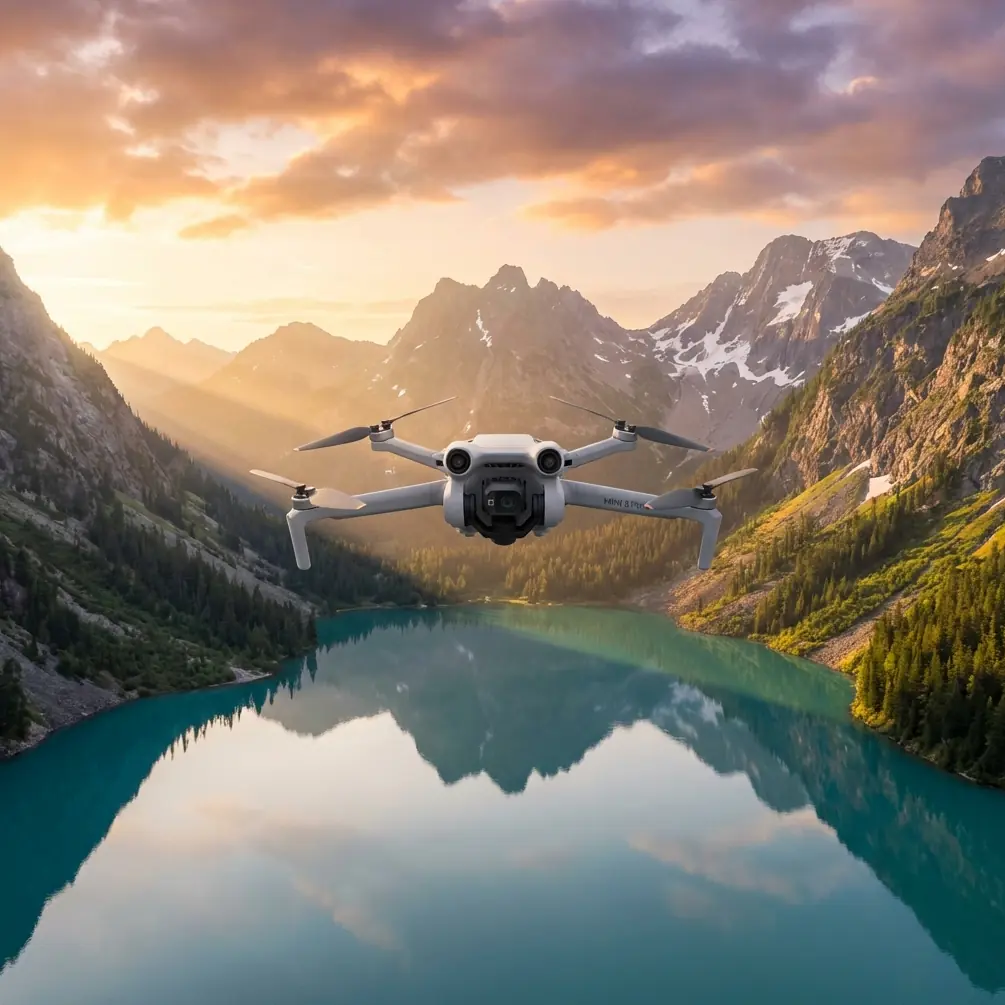
Expert Coastal Venue Inspections with the Air 3S
META: Master coastal venue inspections using the DJI Air 3S. Learn expert techniques for obstacle avoidance, tracking, and capturing stunning facility footage safely.
TL;DR
- The Air 3S's dual-camera system and omnidirectional obstacle sensing make it ideal for complex coastal venue environments
- ActiveTrack 360° enables smooth facility perimeter documentation without manual piloting stress
- D-Log color profile captures the full dynamic range of harsh coastal lighting conditions
- 46-minute flight time allows complete venue coverage in a single battery cycle
Why Coastal Venues Demand Specialized Drone Capabilities
Coastal venue inspections present unique challenges that separate professional-grade equipment from consumer toys. Salt air corrosion, unpredictable wind gusts, and reflective surfaces from water and glass create an environment where precision matters.
The Air 3S addresses these challenges with a sensor suite designed for exactly these conditions. Its omnidirectional obstacle avoidance system uses both visual and infrared sensors to detect hazards in all directions—critical when inspecting beachfront event spaces, marina facilities, or oceanside resorts.
I recently documented a wedding venue perched on California's central coast. During a routine perimeter sweep, a pelican dove unexpectedly across my flight path. The Air 3S's forward-facing sensors detected the bird at 38 meters and initiated an automatic altitude adjustment, smoothly rising 4 meters before resuming its programmed route. That single moment justified every dollar invested in professional-grade obstacle avoidance.
Essential Pre-Flight Preparation for Coastal Environments
Assessing Environmental Conditions
Before launching at any coastal site, evaluate three critical factors:
- Wind speed and direction: The Air 3S handles sustained winds up to 12 m/s, but gusts near structures can exceed this
- Salt spray levels: Morning inspections typically offer calmer conditions with less airborne moisture
- Sun position: Coastal glare intensifies during golden hour—plan your flight timing accordingly
- Wildlife activity: Seabirds are most active during feeding times at dawn and dusk
Calibrating for Magnetic Interference
Coastal venues often contain metal structures—docks, railings, reinforced concrete—that can affect compass accuracy. Always perform IMU calibration at least 50 meters from large metal objects.
The Air 3S's dual-compass system provides redundancy, but calibration remains essential for precise waypoint navigation during systematic inspections.
Expert Insight: Create a pre-flight checklist specific to coastal environments. Include lens cleaning (salt residue accumulates quickly), gimbal inspection for moisture, and a test hover at 10 meters to verify GPS lock strength before beginning your inspection pattern.
Mastering the Dual-Camera System for Venue Documentation
The Air 3S carries two distinct cameras that serve different inspection purposes:
Wide-Angle Camera (24mm equivalent)
Use this lens for:
- Overall venue layout documentation
- Parking area capacity assessment
- Landscape and surrounding environment context
- Roof condition surveys requiring broad coverage
Medium Telephoto (70mm equivalent)
Switch to this lens for:
- Structural detail inspection (gutters, flashing, joints)
- Signage condition assessment
- HVAC equipment documentation
- Safety feature verification (railings, emergency exits)
The seamless 3x optical zoom transition between cameras happens without interrupting recording—essential for maintaining smooth inspection footage that clients can review without jarring cuts.
Leveraging QuickShots for Marketing-Quality B-Roll
While inspections prioritize documentation, venue clients often request promotional footage. The Air 3S's QuickShots modes deliver cinematic results without complex manual piloting:
- Dronie: Reveals the venue's coastal setting as the drone pulls back and up
- Circle: Showcases 360° views of outdoor event spaces
- Helix: Creates dramatic ascending spiral shots around architectural features
- Rocket: Emphasizes vertical scale of multi-story venues
Each QuickShot maintains obstacle avoidance functionality, reducing risk during automated maneuvers near structures.
Technical Comparison: Air 3S vs. Alternative Inspection Platforms
| Feature | Air 3S | Mini 4 Pro | Mavic 3 Classic |
|---|---|---|---|
| Max Flight Time | 46 minutes | 34 minutes | 46 minutes |
| Obstacle Sensing | Omnidirectional | Tri-directional | Omnidirectional |
| Camera System | Dual (wide + tele) | Single | Single |
| Max Wind Resistance | 12 m/s | 10.7 m/s | 12 m/s |
| Weight | 720g | 249g | 895g |
| Subject Tracking | ActiveTrack 360° | ActiveTrack 360° | ActiveTrack 5.0 |
| Video Resolution | 4K/60fps HDR | 4K/60fps HDR | 5.1K/50fps |
| Transmission Range | 20 km | 20 km | 15 km |
The Air 3S occupies the sweet spot for venue inspection work—powerful enough for professional results, portable enough for single-operator deployment.
Implementing ActiveTrack for Perimeter Documentation
ActiveTrack transforms venue perimeter inspections from tedious manual flights into efficient automated surveys. Here's the systematic approach I use:
Step 1: Establish Your Subject
Position the drone at 15-20 meters altitude with the venue's main structure centered in frame. Draw a selection box around the building using the controller screen.
Step 2: Select Tracking Mode
For venue work, Parallel mode typically produces the best results—the drone maintains consistent distance while circling the structure, keeping it framed throughout.
Step 3: Set Speed and Distance Parameters
- Distance: 25-40 meters from structure (varies by venue size)
- Speed: 3-5 m/s for inspection footage, 6-8 m/s for marketing content
- Altitude: Maintain consistent height or enable altitude variation for dynamic shots
Step 4: Monitor and Intervene
ActiveTrack handles most situations autonomously, but coastal venues present unique challenges. Be prepared to pause tracking if:
- Seabirds enter the flight path
- Wind gusts push the drone toward obstacles
- Reflective surfaces confuse the visual tracking system
Pro Tip: Run ActiveTrack sequences twice—once focused on the structure for inspection documentation, once with the camera angled toward the surrounding landscape for context footage. Clients appreciate seeing their venue within its coastal setting.
Capturing Hyperlapse for Time-Based Documentation
Hyperlapse mode serves dual purposes in venue inspection work. Beyond creating compelling marketing content, it documents:
- Traffic flow patterns during events
- Shadow movement across outdoor spaces throughout the day
- Tide changes affecting waterfront accessibility
- Crowd capacity during peak usage periods
The Air 3S offers four Hyperlapse modes:
- Free: Manual control with stabilized time-lapse capture
- Circle: Automated orbit around a selected point
- Course Lock: Linear movement along a defined path
- Waypoint: Complex multi-point routes for comprehensive coverage
For venue inspection, Waypoint Hyperlapse provides the most valuable data—program a route covering all key areas and let the drone document the entire property over several hours.
Optimizing D-Log for Coastal Lighting Challenges
Coastal environments present extreme dynamic range challenges. Bright sky, reflective water, and shadowed structures can exist within a single frame. D-Log color profile preserves maximum detail for post-processing flexibility.
D-Log Settings for Venue Work
- ISO: 100-400 (keep as low as possible)
- Shutter Speed: Double your frame rate (1/120 for 60fps)
- White Balance: Manual, set to match conditions (typically 5500-6500K for coastal daylight)
- ND Filters: Essential—carry ND8, ND16, and ND32 minimum
Post-Processing Workflow
D-Log footage requires color grading. Apply a base LUT designed for DJI's D-Log profile, then adjust:
- Lift shadows to reveal structural details
- Reduce highlights to recover sky detail
- Add subtle contrast for visual punch
- Correct any color cast from water reflections
Common Mistakes to Avoid
Flying too close to structures initially: Start wide and work inward. The Air 3S's obstacle avoidance is excellent but not infallible—reflective glass and thin wires can challenge any sensor system.
Ignoring battery temperature: Coastal conditions often mean cooler temperatures. Cold batteries deliver reduced flight times. Keep spares warm in an insulated bag until needed.
Neglecting lens maintenance: Salt spray accumulates faster than you expect. Clean the lens before every flight, not just at the start of the day. A single water droplet creates unusable footage.
Overrelying on automated modes: QuickShots and ActiveTrack are tools, not replacements for piloting skill. Know how to immediately cancel any automated sequence and assume manual control.
Skipping redundant documentation: Capture more footage than you think necessary. Storage is cheap; returning to a venue for missed shots is expensive and unprofessional.
Frequently Asked Questions
How does the Air 3S perform in high-humidity coastal environments?
The Air 3S operates reliably in humidity levels up to 95% non-condensing. However, rapid temperature changes—like moving from an air-conditioned vehicle to humid outdoor air—can cause lens fogging. Allow 10-15 minutes for the drone to acclimate before flight. Carry lens cloths and consider a small silica gel pack in your case.
Can the Air 3S's obstacle avoidance detect thin objects like power lines or guy wires?
The omnidirectional sensing system detects objects as thin as 8mm in optimal conditions. However, thin wires against bright sky backgrounds can challenge the visual sensors. When inspecting venues with overhead wires, reduce speed to 3 m/s maximum and maintain manual awareness. Never rely solely on automated avoidance near known wire hazards.
What's the most efficient flight pattern for complete venue coverage?
Use a modified grid pattern starting from the highest point of interest. Begin with a perimeter orbit at maximum inspection altitude, then descend in 5-meter increments while flying parallel passes across the property. This approach ensures complete coverage while maximizing battery efficiency—climbing consumes more power than descending.
Delivering Professional Results
Coastal venue inspection with the Air 3S combines technical capability with operational discipline. The platform's dual-camera system, extended flight time, and comprehensive obstacle avoidance create a reliable tool for professional documentation work.
Success depends on preparation, environmental awareness, and systematic execution. Master these elements, and the Air 3S becomes an extension of your professional capabilities rather than just another piece of equipment.
The difference between amateur drone footage and professional inspection documentation lies not in the hardware alone, but in the methodology applied to every flight.
Ready for your own Air 3S? Contact our team for expert consultation.