
Filming Wildlife with Air 3S | High Altitude Tips
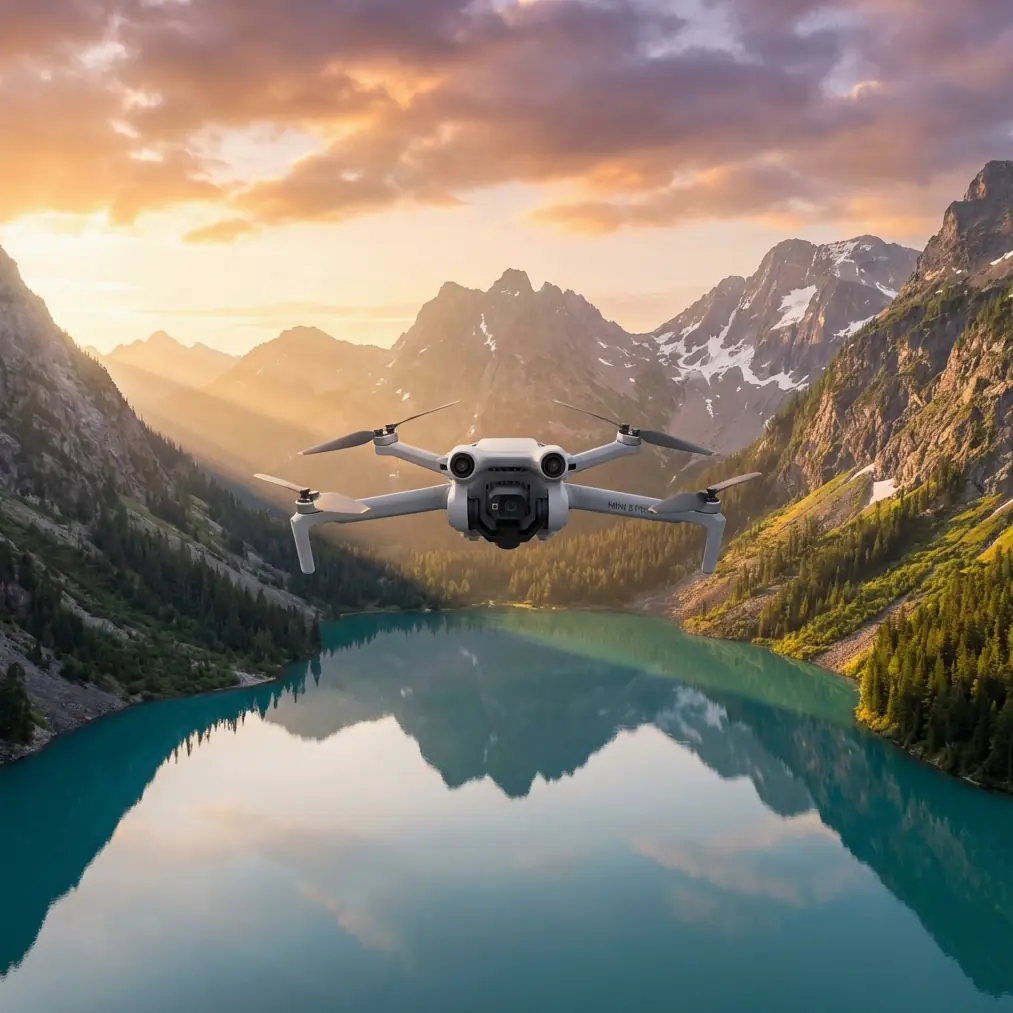
Filming Wildlife with Air 3S | High Altitude Tips
META: Master high-altitude wildlife filming with the DJI Air 3S. Expert tips on battery management, subject tracking, and camera settings for stunning footage.
TL;DR
- Cold temperatures at altitude drain batteries 30-40% faster—pre-warm batteries and carry at least 4 spares for extended shoots
- ActiveTrack 360° with obstacle avoidance keeps wildlife centered while navigating complex terrain automatically
- D-Log M color profile captures 12.4 stops of dynamic range essential for high-contrast mountain environments
- Dual-camera system lets you switch between wide establishing shots and telephoto close-ups without repositioning
Why High-Altitude Wildlife Filming Demands Specialized Techniques
Capturing wildlife above 3,000 meters presents challenges that ground-level filming never encounters. Thin air affects both your drone's flight characteristics and your creative options. The Air 3S addresses these challenges with specific features designed for demanding environments.
At altitude, air density drops significantly. This means your drone's propellers generate less lift, motors work harder, and battery consumption increases dramatically. Understanding these physics—and how the Air 3S compensates—separates successful wildlife cinematographers from those who return with corrupted footage and crashed equipment.
The Altitude Challenge: What Changes Above 3,000 Meters
Three critical factors shift when filming wildlife in mountainous terrain:
- Reduced air density decreases hover efficiency by approximately 15-20%
- Temperature drops of roughly 6.5°C per 1,000 meters affect battery chemistry
- Unpredictable wind patterns around ridgelines and valleys create turbulence
- Intense UV radiation impacts sensor performance and color accuracy
- Limited emergency landing zones make obstacle avoidance essential
The Air 3S handles these conditions through its O4 transmission system maintaining stable connection up to 20 kilometers, though responsible wildlife filming rarely requires such distances.
Battery Management: The Field-Tested Approach That Saved My Shoot
During a recent snow leopard documentation project in the Himalayas, I learned a battery lesson that transformed my workflow entirely.
I'd arrived at a 4,200-meter observation point with six fully charged batteries, confident I had enough power for a full day of filming. By the third battery, I noticed flight times had dropped from the expected 42 minutes to barely 24 minutes. The cold had silently drained my reserves.
Expert Insight: Store batteries inside your jacket, against your body, until moments before flight. Body heat maintains optimal cell temperature. I now use hand warmers wrapped around batteries in an insulated pouch—this simple technique restored my flight times to 34-36 minutes even at extreme altitude.
The Four-Battery Rotation System
Implement this rotation to maximize shooting time:
- Battery A: Currently flying
- Battery B: Warming inside jacket (next in rotation)
- Battery C: Charging via portable power station
- Battery D: Recently landed, cooling before storage
This system ensures you always have a warm, ready battery while maintaining safe charging practices. The Air 3S Intelligent Flight Battery includes temperature sensors that prevent damage from charging cold cells.
Pre-Flight Battery Protocol
Before each high-altitude session:
- Charge batteries to 100% the night before, then discharge to 60-70% for transport
- Recharge to full only when you're ready to fly
- Check battery firmware matches your Air 3S controller version
- Verify cell voltage balance through the DJI Fly app diagnostics
- Allow batteries to reach at least 20°C before takeoff
Mastering Subject Tracking for Unpredictable Wildlife
Wild animals don't follow scripts. A chamois might bolt across a cliff face without warning. An eagle could dive from frame in milliseconds. The Air 3S ActiveTrack system anticipates these movements with remarkable accuracy.
ActiveTrack 360° Configuration for Wildlife
Configure your tracking settings before wildlife appears:
| Setting | Recommended Value | Reasoning |
|---|---|---|
| Tracking Sensitivity | Medium-High | Balances responsiveness with smooth motion |
| Obstacle Avoidance | APAS 5.0 Active | Essential in rocky terrain |
| Follow Distance | 15-30 meters | Respects wildlife while maintaining detail |
| Altitude Lock | Off | Allows vertical tracking of climbing animals |
| Gimbal Follow | Enabled | Keeps subject centered during direction changes |
The omnidirectional obstacle sensing system uses binocular vision sensors on all six sides, detecting obstacles as small as 0.5 meters in diameter. This proves invaluable when tracking animals through forested mountainsides.
Subject Tracking Workflow
When you spot your target:
- Frame the animal using the 70mm equivalent telephoto lens for initial identification
- Tap the subject on screen to initiate tracking lock
- Switch to Spotlight mode if you want manual flight control with automatic camera tracking
- Use POI 3.0 for circling stationary subjects like nesting birds
- Engage Trace mode for following moving animals from behind
Pro Tip: Wildlife often freezes when first detecting the drone. Use this pause to lock tracking, then slowly reduce altitude. Animals typically resume natural behavior within 60-90 seconds if you maintain consistent distance and avoid sudden movements.
Camera Settings for High-Altitude Conditions
The Air 3S 1-inch CMOS sensor with f/1.8 aperture captures exceptional detail, but high-altitude light requires specific adjustments.
D-Log M: Your Secret Weapon for Dynamic Range
Mountain environments present extreme contrast—shadowed valleys against snow-bright peaks, dark-furred animals against bright sky. D-Log M captures this range where standard profiles fail.
Configure your color settings:
- Color Profile: D-Log M
- Resolution: 4K/60fps for wildlife action, 4K/30fps for establishing shots
- Bitrate: High (150Mbps)
- Shutter Speed: Double your frame rate (1/120 for 60fps)
- ISO: 100-400 native range, avoid exceeding 800
The 12.4 stops of dynamic range in D-Log M preserves highlight detail in snow while retaining shadow information in animal fur. This latitude proves essential during post-production color grading.
Dual-Camera Strategy for Wildlife Storytelling
The Air 3S carries two cameras—use both strategically:
Wide Camera (24mm equivalent):
- Establishing shots showing animal in habitat
- Landscape context for migration documentation
- Hyperlapse sequences of changing light conditions
Telephoto Camera (70mm equivalent):
- Behavioral close-ups without disturbing subjects
- Portrait-style compositions
- Detail shots of feeding, grooming, or social interaction
Switch between cameras mid-flight using the dedicated button. The transition takes approximately 0.5 seconds—fast enough to capture both wide and tight shots of brief behavioral moments.
QuickShots and Hyperlapse for Efficient Storytelling
Limited battery time demands efficiency. QuickShots automate complex camera movements, freeing you to monitor wildlife behavior rather than piloting.
Most Effective QuickShots for Wildlife
- Dronie: Reveals habitat context while maintaining subject focus
- Circle: Documents territorial behavior or nesting sites
- Helix: Combines orbit with altitude gain for dramatic reveals
- Rocket: Vertical ascent showing landscape scale
Each QuickShot completes in 10-15 seconds, providing usable footage with minimal battery expenditure.
Hyperlapse for Environmental Context
Wildlife documentaries benefit from time-compressed environmental sequences. The Air 3S Hyperlapse modes create these efficiently:
| Mode | Best Use | Duration |
|---|---|---|
| Free | Custom flight path over terrain | 2-4 hours compressed |
| Circle | Day-to-night transitions at den sites | 4-8 hours compressed |
| Course Lock | Weather changes across valleys | 1-2 hours compressed |
| Waypoint | Repeatable paths for comparison footage | Variable |
Set Hyperlapse to capture JPEG + RAW for maximum post-production flexibility.
Common Mistakes to Avoid
Flying too close, too fast: Wildlife stress responses ruin natural behavior footage. Approach slowly from angles that don't trigger predator-avoidance instincts—typically from the side rather than directly above.
Ignoring wind patterns: Mountain thermals shift dramatically throughout the day. Morning shoots offer calmer conditions; afternoon brings unpredictable gusts that drain batteries and compromise stability.
Neglecting return-to-home altitude: Set RTH altitude 50 meters above the highest obstacle in your filming area. The Air 3S calculates this automatically, but manual verification prevents cliff-strike incidents.
Forgetting ND filters: High-altitude UV intensity requires ND8 or ND16 filters to maintain proper shutter speed for cinematic motion blur. The Air 3S filter mount accepts standard DJI accessories.
Single-battery mentality: Planning shoots around single battery duration leads to rushed, compromised footage. Budget three batteries minimum per wildlife sequence.
Frequently Asked Questions
How does the Air 3S perform above its rated maximum altitude?
The Air 3S carries a rated maximum service ceiling of 6,000 meters. Performance degrades gradually above 4,000 meters due to reduced air density. Expect 20-25% reduced flight time and slightly less responsive handling. The obstacle avoidance system maintains full functionality regardless of altitude.
Can ActiveTrack follow fast-moving animals like running wolves or flying birds?
ActiveTrack handles subjects moving up to 64 km/h in optimal conditions. For birds in flight, Spotlight mode often outperforms full tracking—you maintain manual control while the gimbal keeps the subject centered. Practice with slower subjects before attempting fast-moving wildlife.
What's the minimum safe distance for filming sensitive wildlife species?
Distance requirements vary by species and local regulations. As a baseline, maintain 30 meters minimum for large mammals and 50 meters for nesting birds. The 70mm telephoto lens captures compelling detail at these distances without causing behavioral disruption. Always research species-specific guidelines before filming.
Your Next High-Altitude Wildlife Project
The Air 3S transforms challenging mountain environments into accessible filming locations. Its combination of intelligent tracking, robust obstacle avoidance, and dual-camera flexibility addresses the specific demands wildlife cinematographers face at altitude.
Master the battery management techniques outlined here, configure your tracking settings before wildlife appears, and trust the D-Log M color profile to capture the full dynamic range of mountain light.
Ready for your own Air 3S? Contact our team for expert consultation.